Comments and anecdotes about the event:
Hi fellow observers,
If you haven't head of Garvey Ranch Observatory, it's locate right at the end of the east parking lot of Garvey Ranch Park in Monterey Park, south of Garvey on Orange, which is west of New Ave.
We have an excellent 8-inch refractor for visual use, and a 4-inch refractor for imaging. It's open every Wed night from 7pm to 10pm, weather permitting for the observatory specifically and the facilities in general. It is NOT a pristine dark sky spot for obvious reasons, but we manage to get by.
Here's my report on what happened Mar 13th
I got there around 7pm. Skies were clear of clouds. The usual haze was present.
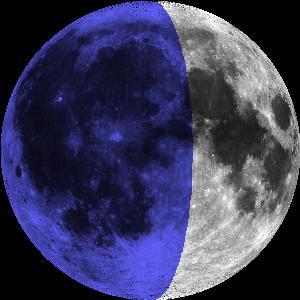
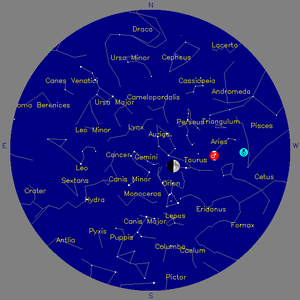
I targeted Comet Iwamoto around 8:15pm. I star hopped off the south western corner of Auriga, then swept for it using the 8-inch and a 50mm eyepiece, but I saw nothing. However, Vance saw it with the wide field camera and the 4-inch refractor. It wasn't much, even after an integrated exposure time of 520 seconds. The comet's color is greenish, as you would expect from the plasma it is emitting. The lack of any sign of yellowish white means there appears to be no or little dust from this one. The fact that we couldn't see it in the 8-inch is due to the nearby moon, but also says that this comet is now faint, probably fainter than 11th to 12th mag.
Background erased using PixInsight.
I then noticed on my printout from Starry Night Pro that the faint globular clusters, Palomar-2, was southeast of the comet. Another star hop from the south-western Auriga, and there it was.
Like the comet, it was not visible in the 8-inch as I swept the region, but it was visible in the images from the 4-inch. That red smudge is it.
The Palomar globulars were discovered by a variety of astronomers on the Paloma Observatory Sky Survey (POSS) plates taken using the 48-inch Schmidt, and hence are small and faint. Since this one is in Auriga, the reddish color is due to dust within our Milky Way galaxy, which tends to filter out all colors except for red.
56 x 10 sec frames stacked. Background erased using PixInsight. Imaged at 8:33pm.
Far south of both these objects, the next object was R Leporis, a carbon star. I star hopped from Rigel to mu Leporis, then west to the star. The image does it no justice. We over-exposed it and hence saturated it. R Leporis is faint, but a deep red color, with no hint of any other. It is also known as Hind's Crimson Star.
Image is a stack of 116 x 2.6 sec frames taken at 8:45pm. The background glow was erased using PixInsight. The visual view of the star matches the red halo around it in the image.
On a previous visit to Garvey, I saw and imaged M35 in Gemini, but not the small companion open cluster NGC 2158. On this night we got both. Of course, only M35 was visible in the 8-inch. Again, the nearby moon ruined things.
M35 is young, as most open clusters are, and dominated by young blue-white stars, probably of spectral class B or A. However, NGC-2158 looks reddish due to all the dust clouds between us and the cluster, as was the case with Pal-2.
Imaged is composed of 54 x 10 secs frames Live-stacked using Sharpcap, taken around 9:17pm, then PixInsight was used to erase the background color.
Come visit Garvey Ranch some clear Wednesday night ! A few folks set up their telescopes on the lawn in front, we hold a mirror polishing session in the building beneath the observatory, and there are always people to talk astronomy-talk with !
--- Dave
_._,_._,_