Comments and anecdotes about the event:
Well, another night at Garvey Ranch observatory, and for a change a good one, right before the clouds and rain hit us on Friday. Makes up for the dismal nights at the Nightfall star party, where I traveled 180 miles, only to find that my old trusty mount quit star tracking !!! ☹ No photos ! ☹
I had lots of visitors this night. Perhaps Veterans Day? Perhaps something else? But dozens of visitors, it seems, visited us !
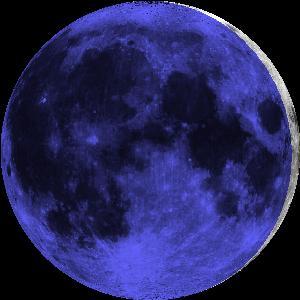
The moon was too low when I opened the observatory, and was only a thin crescent, so no moon.
First target was the comet 161P (161st periodic comet recognized) Hartley-IRAS, off the tail-end of Sagitta the Arrow. Didn't see it in the 8-inch, and I didn't expect to, since it's listed as 10th mag, so it's really 12th mag, hence too faint to see in our 8-inch refractor, but it appeared as a faint bluish glow with a brighter blue dot in the center. This is the raw image with just GraXpert applied to remove most of the light pollution.
This is the raw image with just GraXpert applied to remove most of the light pollution.
Then M71, the globular star cluster in Sagitta the Arrow. That's it, down and to the right of center.
Then Saturn. Visually at 240x through the 8-inch, it was better than the photographs. Titan and Dione were on one side, with Rhea and Tethys on the other. The A & B rings with Cassini's Division are visible in the photo, along with the ring shadow below the rings, Saturn's shadow to one side as the rings pass behind the planet.
Then the Double open cluster, NGCs 884 and 869. Easily visible in the 8-inch.
Then two faint open star cluster, NGC 744 and NGC 1245. I didn't see them in the 8-inch, and while I photographed then they aren't worth posting here.
Then a pair of faint galaxies, NGCs 1160 and 1161. They weren't visible in the 8-inch. The only reason I went for them is that they were near to NGC 1245. Again, only GraXpert was applied to remove the light pollution, because any further processing diminishes the details in the galaxies. NGC 1160 is the brighter one, in-between three stars, with 1161 faintly above it.
Then lastly a large group of faint galaxies, the brightest one being NGC 1272 I think. Every faint fuzzy star is a galaxy. Compare to the real stars to see the difference. There may be a dozen or so galaxies.
Clear and steady nights everyone !
--- Dave