Comments and anecdotes about the event:
Bob Horton: We had an excellent turnout on the 13th. Perhaps 50 people; many of them families with children. Laura had her Seestar capturing galaxy images and wowing the people gathering in the courtyard. I keep the Clark aimed at double stars. Jim Hendrickson was operating the 12” Meade.
Katie Chippendale: I counted 32 visitors on the 13th. 24 adults, 2 teens, and 6 children. That doesn't include the members that also came by and the volunteers. I think everyone in total was about 40.
From Jim Hendrickson:
Saturday, June 13, 2026
Weather: Clear, calm, 70°
Participants: Bob Horton, Jim Hendrickson, Katie Chippendale, John Kocur, Mike Kerr, Laura Landen, Francine Jackson
Attendees: 15
Observed: Double Double, M5, M27, Coathangar, DoDz 8, M4, Mizar & Alcor, M101
Photos: https://flic.kr/s/aHBqjCXoYE
Reports by Jim Hendrickson
A sunny and unseasonably warm Saturday afternoon gave way to transparent skies after sundown, with temperatures hovering around 70°.
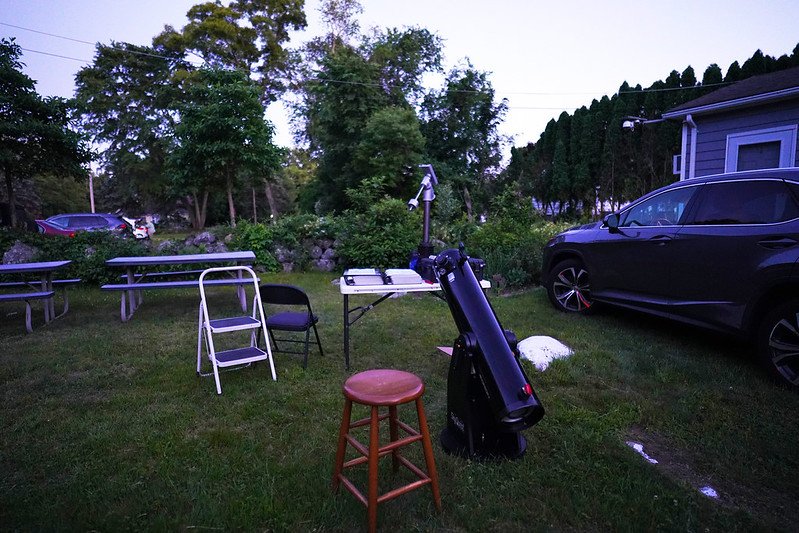
John Kocur was set up in the front yard with one of the 8-inch Dobsionian telescopes that he just completed refurbishments on, and had it out for field testing. He observed a variety of objects within and around the Summer Triangle, including Vega, the Double Double, M57, and M27.
Bob Horton was in the 8-inch dome and observed the Double Double through the Clark telescope.
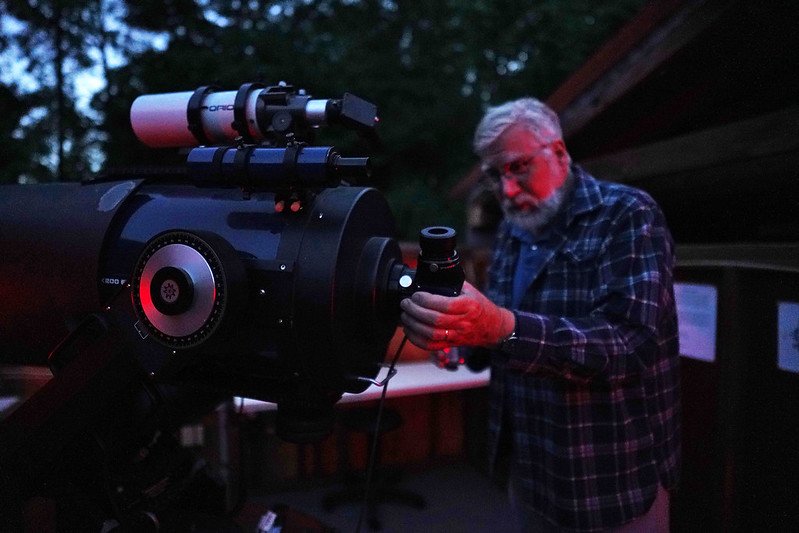
Also present were Katie Chippendale and Francine Jackson, who both greeted and interacted with visitors, Mike Kerr, assisting in the Clark telescope, and Laura Landen, capturing an image of galaxy M101 with the Seestar.
I opened the 12-inch Meade and aligned on Arcturus as soon as it became visible in twilight.
This was the first open night of the year that mosquitoes made their presence known, and the silhouette of a bat could be seen passing overhead.
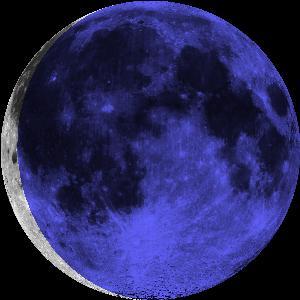
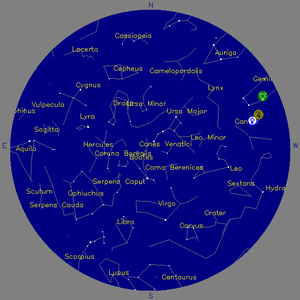
The late sunsets and long-lingering twilight during mid-June evenings do not offer a significant amount of dark hours during our regular sessions, and with no Moon or bright planets in the areas of sky accessible with the telescopes, I aimed at one of the brightest objects that was well-placed in the sky, the globular cluster M5. The early visitors enjoyed watching it become visible from an indistinct faint blob to eventually resolving into stars as the sky darkened.
Mid-June nights also bring more welcome insects, the fireflies. About a half-dozen or so of them could be seen over the field and near the trees on the west side of the observatory, and a few flickered across on the east side as well. It is interesting to note that they remained rather dormant until twilight nearly completely faded away.
As visitors enjoyed the view through the telescope, one reported seeing a meteor in the south, likely a June Bootid.
Before Francine left, I had to show the Coathanger, a seasonal favorite. While the 1.5° x 0.5° asterism is too large to show in the main telescope, the ST-80 finder frames it nicely. It also got positive reactions from some of our younger visitors.
From there, I showed nearby objects including M27, and the Double Double.
Heading off the beaten path, I moved the telescope to DoDz 8, the 8th entry in the obscure Dolidze-Dzimselejsvili catalog of star clusters (which aren’t all actual star clusters), and entry number 53 on the Astronomical League’s Asterism Observing Program list. The grouping of seven stars located near delta Herculis is described as resembling a 5-pointed star, but it is more notable for having two distinct pairs of 8th magnitude stars in a near-symmetric orientation.
I moved to the globular cluster M4, near Antares, which was approaching the meridian, but it was only partially visible behind the roof.
A total of about 15 visitors came to observe through the scope, and one who stayed a while enjoyed chatting about a Meade 10-inch SCT he had just acquired, and asked several questions about using it, indicating that he was planning to bring it to a future open night.
John and I were the last to leave, closing at 11:30pm.